
The WCC Man Behind Wellington's Trails
Project timeline
Project Donors
The WCC Man Behind Wellington's Trails
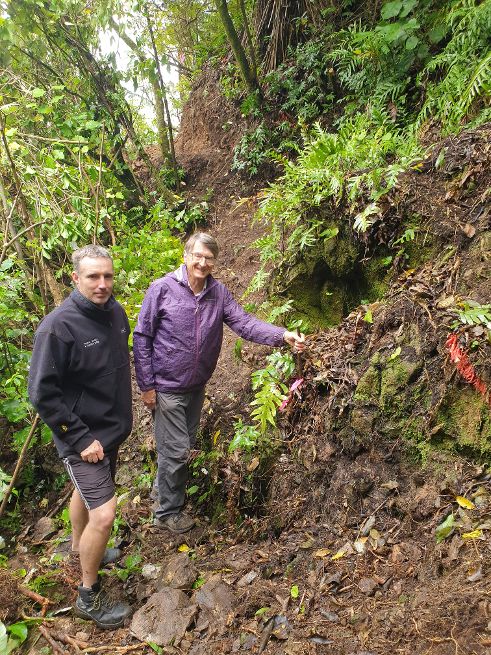
Tim Harkness has spent 24 years at Wellington City Council — the last eight keeping the city's trail network moving. We sat down with him to find out what it actually takes.
Most people who ride or walk Wellington's trails have no idea who Tim Harkness is. That's probably how it's meant to be. His job is to make sure the trails are there when you show up — maintained, signed, safe, and slowly but steadily getting better. When they are, nobody notices. When they're not, Tim's phone buzzes.
He's been WCC's Trails Project Manager since late 2018, and in that time he's overseen somewhere between 40 and 50 projects a year — bridges, new tracks, interpretation panels, ecological surveys, resource consents, contractor engagements, and somewhere in between, about three or four public enquiries or fault reports landing in his inbox every single morning.
"Theres a lot of variety in what people report," he says.
From apprentice gardener to trails manager
Tim's path to the role is not the one you'd predict. He joined WCC in 2002 as an apprentice gardener, working his way through the Botanic Gardens, qualifying as an arborist, running the lower garden area, and eventually moving across to the Park Ranger Team working on the south coast and in the northern reserves on secondment. Had a brief stint managing a team for a private contractor for the Hutt City Council reserves maintenance contract.
Around 2015, WCC created a new ranger position for the western suburbs. Tim got it, and about half his time became Makara Peak.
"I was the first person to really focus dedicated time there," he says. At that point, Makara Peak was a very different place to what it is today. Tim worked alongside Dave Halliday, who was managing the trails and playgrounds program, and spent a lot of time with the Makara Peak Supporters — who were, then as now, doing extraordinary things.
One early memory stands out. The suspension bridge at Makara Peak was being built, funded by the Supporters and managed day-to-day by council. Tim — still a ranger at the time — got roped in. Literally.
"I helped carry timber out and bolt it down. Roped up in a harness, out over the drop. It was a pretty cool experience."
In 2018, WCC restructured its parks team and created a dedicated tracks role. Tim applied and got it. He's been in the role ever since.
What the job actually looks like
The morning we spoke, Tim had arrived at work planning to prepare for our interview. By the time he sat down, he'd already meet with Makara Peaks Park Ranger regarding solar and water supply issues at the park, worked on a signage request from a ranger for the Town Belt, and the Parks Services Managers request to work with a neighbour in the Outer Green Belts fencing issue.
"You just get a lot of reactive work," he says.
The structured part of his week involves getting out to project sites twice a week — he typically has between six and twelve active projects running simultaneously, with more in planning and consenting stages. The rest is processing fault tickets, raising purchase orders, receipting invoices, and doing the documentation that asset & project management requires.
About 65–70% of his time is on trails the rest is spent on reserve projects. Projects Tim has enjoyed working on over the last couple of years include a 5km extension to the Skyline walkway linking Johnsonville to Churton Park, a new bridge at the bottom of the Red Rocks track (helicoptered in), and the restoration of a bridge originally built in 1914 in Central Park — concrete foundations preserved, new period-correct timber decking laid on top.
He also delivered one of WCC's first bilingual interpretation panels in a reserve at the Makara Peak summit — working with the Supporters and specialist consultants to tell the story of the lands history and cultural significance in both English and te reo Māori.
"Its been pretty well received. Looks really cool up there."
Why things take so long — and why that's not anyone's fault
If you've ever wondered why a trail that "everyone knows should be built" seems to take forever to actually happen, Tim's answer is illuminating — and quietly important for understanding why the 2026 OSAP matters so much.
When he came into the role in 2018, track building was a permitted activity. An idea could come in, get a quick ecological check, and be flagged out and approved relatively informally. That world no longer exists.
"Over time things started to tighten up," he says. Ecological requirements became more rigorous. Trail guidelines developed. And then in 2024, a significant change to Wellington's District Plan reclassified track building in significant natural ecosystems from a permitted activity to a restricted discretionary activity — meaning resource consent is now required to remove trees to build a track.
"There was a period where we didn't think we'd be able to do new trails at all."
Even now, best-case timeline from a funded, plan-approved idea to spade in the ground is about six months. Find lizards in the ecological report and you're looking at another six to twelve months for a Wildlife Act Permit from DOC. And if your trail isn't already in an approved plan?
"It can take years and years and years."
He gives an example: a three-stage walking track from Bells Track through to Khandallah Park. It was being discussed before Tim even came into his role in 2018. He inherited it, got it into the 2019 Outer Greenbelt Management Plan, worked through design and consenting, worked with the local community group to build the first two sections — and as of 2026 is still working on the third and final section, hoping to open it this summer.
"From the idea to getting it in a plan, to going through the process — some of these things can genuinely take six to ten years."
The implication for TW's upcoming OSAP submission is clear: being in the plan is everything. Projects with a home in an approved WCC document move. Projects without one can wait a very long time.
Volunteers: essential, not optional
Ask Tim what volunteers contribute to Wellington's trail network and his answer is unambiguous.
"They do a lot of stuff we don't have the resource to do."
The maintenance piece is what he keeps coming back to. New trail building gets attention — it's visible, photogenic, something to celebrate. But the unglamorous work of keeping drainage functioning, clearing debris, checking structures, and heading off problems before they become expensive — that happens because of volunteers, largely invisibly, all the time.
"We'd love to have twenty staff running around out there doing that sort of thing across the trail network. We don't."
He singles out Brooklyn Trail Builders as a benchmark.
"BTB is the gold standard of trail maintenance. They look after their tracks because they have ownership of them. They're out there religiously working on drainage — they just care."
The relationship between WCC and volunteer groups, he says, works best when communication flows consistently in both directions. When it breaks down, it's usually because one side has gone quiet — groups acting with good intentions but without checking in, or WCC not staying close enough to provide guidance in time.
"If we don't know what they're up to, we can't help them. And if they don't know what we're working on, they can't help us either."
On Trails Wellington
Tim is measured but genuine when asked about TW's impact. The early co-investment in maintenance renewals enabled work that wouldn't have been a priority for council to fund on its own. He's seen TW evolve through different people and different phases, and from his vantage point — managing the capital works programme and the daily operational reality of the network — co-investment partners who can help prioritise and fund work outside WCC's core budget make a real difference to what gets built.
What he's looking forward to
Ask Tim what excites him about the next two to three years and the answer is specific rather than rhetorical.
Completing the Makara Peak Master Plan is the headline. Within three to four years, he believes almost everything on the plan will have been delivered — a mix of contractor-built and volunteer-built, with the Supporters central to getting it done.
"We've got about three or four trails to go. The four-kilometre southern Grade 4 trail is going to be really cool."
And that walking track from Ngaio to Khandallah Park — the one that's been in progress since before he even took the role — is finally getting its third and final section this summer.
"I've been looking forward to finishing that since the day I started."
Trails Wellington thanks Tim Harkness for his time and his candour. The work he and his team do — alongside WCC rangers, ecologists, contractors, and volunteer trail builders across the city — is what makes Wellington's trail network function. Next time you drop into a perfectly drained berm or cross a bridge without thinking about it, you know a little more about how it got there.
Tim’s Trail numbers
- 24 years at WCC
- 8 years as Trails Project Manager
- 6 – 12 active projects at any time
- 40 – 50 projects per year
- 3 – 4 fault reports per day
- 65 – 70% of time on trails
The WCC Man Behind Wellington's Trails
Tim Harkness has spent 24 years at Wellington City Council — the last eight keeping the city's trail network moving. We sat down with him to find out what it actually takes.
Most people who ride or walk Wellington's trails have no idea who Tim Harkness is. That's probably how it's meant to be. His job is to make sure the trails are there when you show up — maintained, signed, safe, and slowly but steadily getting better. When they are, nobody notices. When they're not, Tim's phone buzzes.
He's been WCC's Trails Project Manager since late 2018, and in that time he's overseen somewhere between 40 and 50 projects a year — bridges, new tracks, interpretation panels, ecological surveys, resource consents, contractor engagements, and somewhere in between, about three or four public enquiries or fault reports landing in his inbox every single morning.
"Theres a lot of variety in what people report," he says.
From apprentice gardener to trails manager
Tim's path to the role is not the one you'd predict. He joined WCC in 2002 as an apprentice gardener, working his way through the Botanic Gardens, qualifying as an arborist, running the lower garden area, and eventually moving across to the Park Ranger Team working on the south coast and in the northern reserves on secondment. Had a brief stint managing a team for a private contractor for the Hutt City Council reserves maintenance contract.
Around 2015, WCC created a new ranger position for the western suburbs. Tim got it, and about half his time became Makara Peak.
"I was the first person to really focus dedicated time there," he says. At that point, Makara Peak was a very different place to what it is today. Tim worked alongside Dave Halliday, who was managing the trails and playgrounds program, and spent a lot of time with the Makara Peak Supporters — who were, then as now, doing extraordinary things.
One early memory stands out. The suspension bridge at Makara Peak was being built, funded by the Supporters and managed day-to-day by council. Tim — still a ranger at the time — got roped in. Literally.
"I helped carry timber out and bolt it down. Roped up in a harness, out over the drop. It was a pretty cool experience."
In 2018, WCC restructured its parks team and created a dedicated tracks role. Tim applied and got it. He's been in the role ever since.
What the job actually looks like
The morning we spoke, Tim had arrived at work planning to prepare for our interview. By the time he sat down, he'd already meet with Makara Peaks Park Ranger regarding solar and water supply issues at the park, worked on a signage request from a ranger for the Town Belt, and the Parks Services Managers request to work with a neighbour in the Outer Green Belts fencing issue.
"You just get a lot of reactive work," he says.
The structured part of his week involves getting out to project sites twice a week — he typically has between six and twelve active projects running simultaneously, with more in planning and consenting stages. The rest is processing fault tickets, raising purchase orders, receipting invoices, and doing the documentation that asset & project management requires.
About 65–70% of his time is on trails the rest is spent on reserve projects. Projects Tim has enjoyed working on over the last couple of years include a 5km extension to the Skyline walkway linking Johnsonville to Churton Park, a new bridge at the bottom of the Red Rocks track (helicoptered in), and the restoration of a bridge originally built in 1914 in Central Park — concrete foundations preserved, new period-correct timber decking laid on top.
He also delivered one of WCC's first bilingual interpretation panels in a reserve at the Makara Peak summit — working with the Supporters and specialist consultants to tell the story of the lands history and cultural significance in both English and te reo Māori.
"Its been pretty well received. Looks really cool up there."
Why things take so long — and why that's not anyone's fault
If you've ever wondered why a trail that "everyone knows should be built" seems to take forever to actually happen, Tim's answer is illuminating — and quietly important for understanding why the 2026 OSAP matters so much.
When he came into the role in 2018, track building was a permitted activity. An idea could come in, get a quick ecological check, and be flagged out and approved relatively informally. That world no longer exists.
"Over time things started to tighten up," he says. Ecological requirements became more rigorous. Trail guidelines developed. And then in 2024, a significant change to Wellington's District Plan reclassified track building in significant natural ecosystems from a permitted activity to a restricted discretionary activity — meaning resource consent is now required to remove trees to build a track.
"There was a period where we didn't think we'd be able to do new trails at all."
Even now, best-case timeline from a funded, plan-approved idea to spade in the ground is about six months. Find lizards in the ecological report and you're looking at another six to twelve months for a Wildlife Act Permit from DOC. And if your trail isn't already in an approved plan?
"It can take years and years and years."
He gives an example: a three-stage walking track from Bells Track through to Khandallah Park. It was being discussed before Tim even came into his role in 2018. He inherited it, got it into the 2019 Outer Greenbelt Management Plan, worked through design and consenting, worked with the local community group to build the first two sections — and as of 2026 is still working on the third and final section, hoping to open it this summer.
"From the idea to getting it in a plan, to going through the process — some of these things can genuinely take six to ten years."
The implication for TW's upcoming OSAP submission is clear: being in the plan is everything. Projects with a home in an approved WCC document move. Projects without one can wait a very long time.
Volunteers: essential, not optional
Ask Tim what volunteers contribute to Wellington's trail network and his answer is unambiguous.
"They do a lot of stuff we don't have the resource to do."
The maintenance piece is what he keeps coming back to. New trail building gets attention — it's visible, photogenic, something to celebrate. But the unglamorous work of keeping drainage functioning, clearing debris, checking structures, and heading off problems before they become expensive — that happens because of volunteers, largely invisibly, all the time.
"We'd love to have twenty staff running around out there doing that sort of thing across the trail network. We don't."
He singles out Brooklyn Trail Builders as a benchmark.
"BTB is the gold standard of trail maintenance. They look after their tracks because they have ownership of them. They're out there religiously working on drainage — they just care."
The relationship between WCC and volunteer groups, he says, works best when communication flows consistently in both directions. When it breaks down, it's usually because one side has gone quiet — groups acting with good intentions but without checking in, or WCC not staying close enough to provide guidance in time.
"If we don't know what they're up to, we can't help them. And if they don't know what we're working on, they can't help us either."
On Trails Wellington
Tim is measured but genuine when asked about TW's impact. The early co-investment in maintenance renewals enabled work that wouldn't have been a priority for council to fund on its own. He's seen TW evolve through different people and different phases, and from his vantage point — managing the capital works programme and the daily operational reality of the network — co-investment partners who can help prioritise and fund work outside WCC's core budget make a real difference to what gets built.
What he's looking forward to
Ask Tim what excites him about the next two to three years and the answer is specific rather than rhetorical.
Completing the Makara Peak Master Plan is the headline. Within three to four years, he believes almost everything on the plan will have been delivered — a mix of contractor-built and volunteer-built, with the Supporters central to getting it done.
"We've got about three or four trails to go. The four-kilometre southern Grade 4 trail is going to be really cool."
And that walking track from Ngaio to Khandallah Park — the one that's been in progress since before he even took the role — is finally getting its third and final section this summer.
"I've been looking forward to finishing that since the day I started."
Trails Wellington thanks Tim Harkness for his time and his candour. The work he and his team do — alongside WCC rangers, ecologists, contractors, and volunteer trail builders across the city — is what makes Wellington's trail network function. Next time you drop into a perfectly drained berm or cross a bridge without thinking about it, you know a little more about how it got there.
Tim’s Trail numbers
- 24 years at WCC
- 8 years as Trails Project Manager
- 6 – 12 active projects at any time
- 40 – 50 projects per year
- 3 – 4 fault reports per day
- 65 – 70% of time on trails

Contribute as a guest writer
Share your passion, views and stories with fellow locals and adventure-seeking visitors. Whether it's trail tips, build stories, or something you need us all to laugh about, or think about. Your voice belongs on the map.